
Skip Navigation
 
 
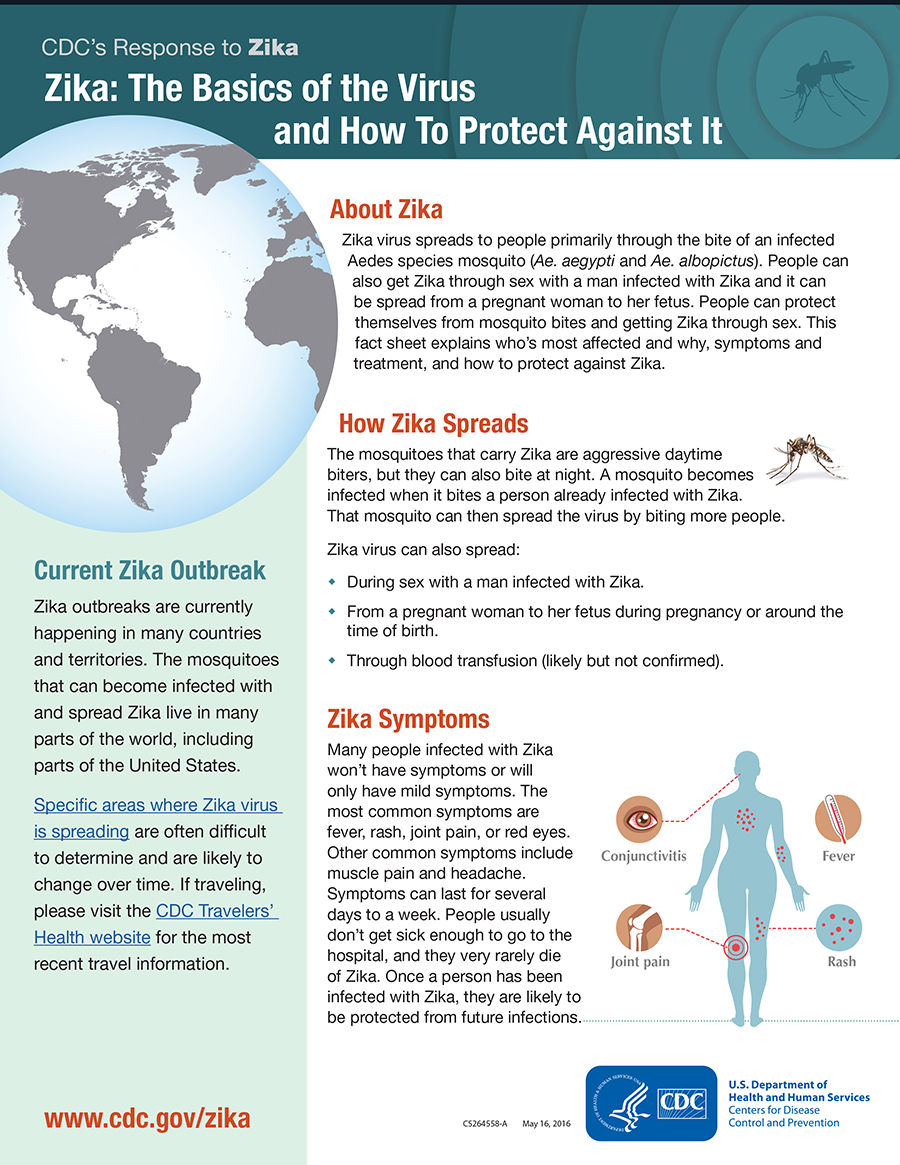
Infographic about Zika basics, including how it spreads, symptoms, and outbreak information.
Readable text from this image

Zika: The Basics of the Virus and How To Protect Against It

About Zika

Zika virus spreads to people primarily through the bite of an infected Aedes species mosquito (Ae. aegypti and Ae. albopictus). People can also get Zika through sex with a man infected with Zika and it can be spread from a pregnant woman to her fetus. People can protect themselves from mosquito bites and getting Zika through sex. This fact sheet explains who’s most affected and why, symptoms and treatment, and how to protect against Zika.

How Zika Spreads

The mosquitoes that carry Zika are aggressive daytime biters, but they can also bite at night. A mosquito becomes infected when it bites a person already infected with Zika. That mosquito can then spread the virus by biting more people.

Zika virus can also spread:

  • During sex with a man infected with Zika.
  • From a pregnant woman to her fetus during pregnancy or around the time of birth.
  • Through blood transfusion (likely but not confirmed).

Zika Symptoms

Many people infected with Zika won’t have symptoms or will only have mild symptoms. The most common symptoms are fever, rash, joint pain, or red eyes. Other common symptoms include muscle pain and headache. Symptoms can last for several days to a week. People usually don’t get sick enough to go to the hospital, and they very rarely die of Zika. Once a person has been infected with Zika, they are likely to be protected from future infections.

The infographic labels these symptom examples:

  • Conjunctivitis
  • Fever
  • Joint pain
  • Rash

Current Zika Outbreak

Zika outbreaks are currently happening in many countries and territories. The mosquitoes that can become infected with and spread Zika live in many parts of the world, including parts of the United States.

Specific areas where Zika virus is spreading are often difficult to determine and are likely to change over time. If traveling, please visit the CDC Travelers’ Health website for the most recent travel information.

www.cdc.gov/zika

U.S. Department of Health and Human Services, Centers for Disease Control and Prevention

May 16, 2016
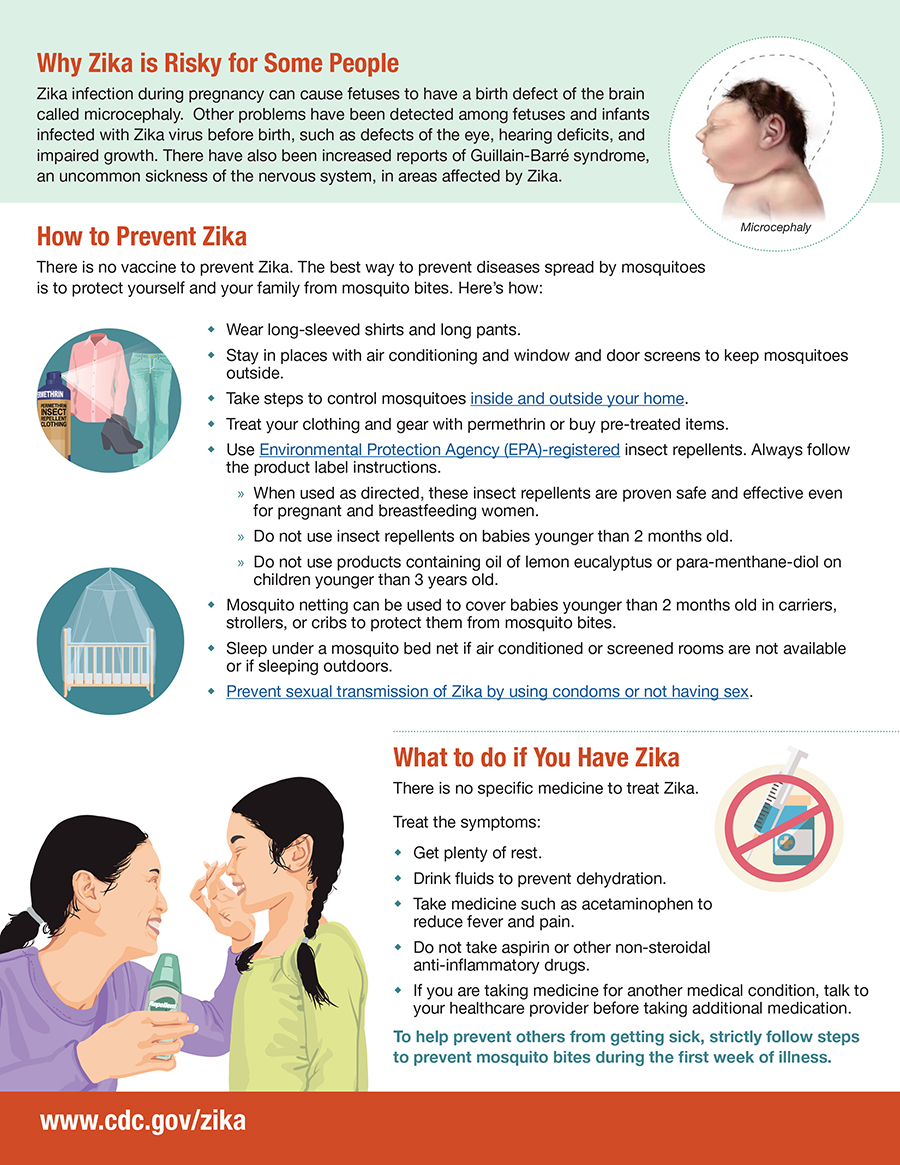
Infographic explaining why Zika is risky during pregnancy, how to prevent Zika, and what to do if infected.
Readable text from this image

Why Zika is Risky for Some People

Zika infection during pregnancy can cause fetuses to have a birth defect of the brain called microcephaly. Other problems have been detected among fetuses and infants infected with Zika virus before birth, such as defects of the eye, hearing deficits, and impaired growth. There have also been increased reports of Guillain-Barré syndrome, an uncommon sickness of the nervous system, in areas affected by Zika.

How to Prevent Zika

There is no vaccine to prevent Zika. The best way to prevent diseases spread by mosquitoes is to protect yourself and your family from mosquito bites. Here’s how:

  • Wear long-sleeved shirts and long pants.
  • Stay in places with air conditioning and window and door screens to keep mosquitoes outside.
  • Take steps to control mosquitoes inside and outside your home.
  • Treat your clothing and gear with permethrin or buy pre-treated items.
  • Use Environmental Protection Agency (EPA)-registered insect repellents. Always follow the product label instructions.
    • When used as directed, these insect repellents are proven safe and effective even for pregnant and breastfeeding women.
    • Do not use insect repellents on babies younger than 2 months old.
    • Do not use products containing oil of lemon eucalyptus or para-menthane-diol on children younger than 3 years old
Escambia County logo

The mission of Escambia County government is to provide efficient, responsive services that enhance our quality of life, meet common needs and promote a safe and healthy community.

Under Florida law, IP addresses and both the content of emails and email addresses are public records. If you do not want your IP address, the content of your email, or your email address released in response to a public records request, do not send electronic mail to this entity. Instead, contact this office by phone or in person.

All content © 2026 Escambia County, FL and its representatives. All rights reserved.