Be Prepared for a Nuclear Explosion
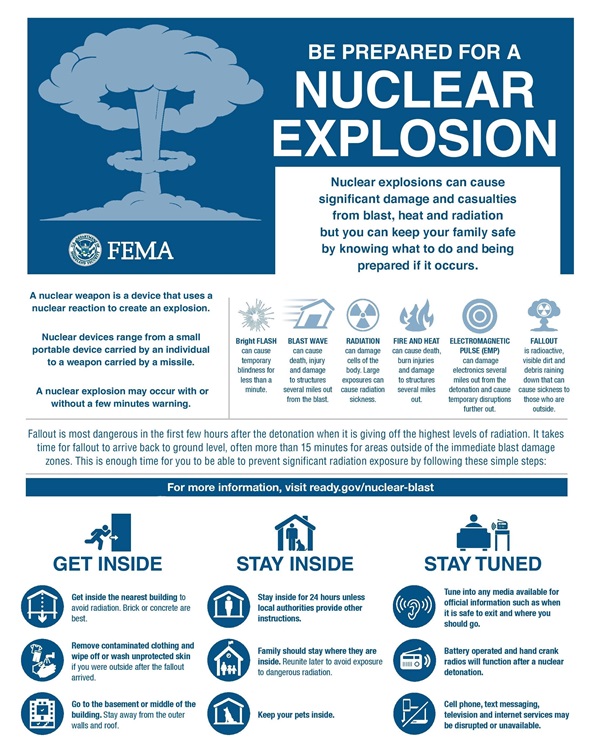
Nuclear explosions can cause significant damage and casualties from blast, heat, and radiation. You can keep your family safe by knowing what to do and being prepared if it occurs.
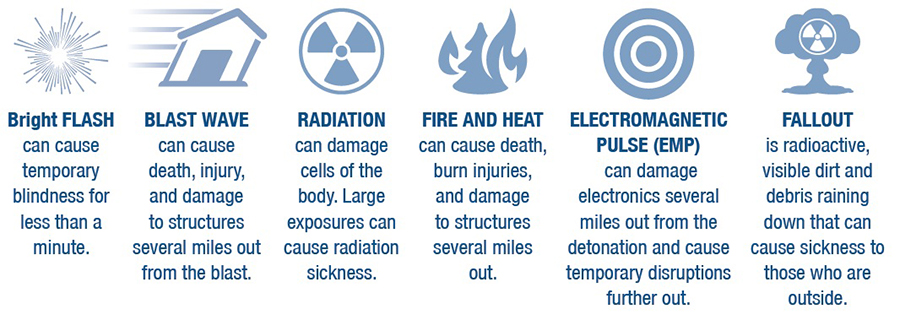
Hazards of a Nuclear Explosion
- Bright flash: Can cause temporary blindness for less than a minute.
- Blast wave: Can cause death, injury, and damage to structures several miles from the blast.
- Radiation: Can damage cells of the body. Large exposures can cause radiation sickness.
- Fire and heat: Can cause burns and ignite fires over several miles.
- Electromagnetic pulse (EMP): Can damage electronics several miles from the detonation.
- Fallout: Radioactive dirt and debris raining down can expose those outside.
Fallout is most dangerous in the first few hours after the detonation when radiation levels are highest. It takes time for fallout to arrive back to ground level, often more than 15 minutes for areas outside the immediate blast zone.
Protective Actions
Get Inside
- Get inside the nearest building to avoid radiation. Brick or concrete buildings are best.
- Remove contaminated clothing and wipe off or wash unprotected skin if exposed.
- Go to the basement or middle of the building, away from outer walls and roof.
Stay Inside
- Stay inside for 24 hours unless local authorities provide other instructions.
- Stay where you are inside to avoid exposure to dangerous radiation.
- Keep your pets inside.
Stay Tuned
- Listen to available media for official information on when it is safe to exit.
- Battery-powered or hand-crank radios will function after a nuclear detonation.
- Cell phone, text messaging, television, and internet services may be disrupted.
For more information, visit ready.gov/nuclear-blast