Frostbite & Hypothermia
In cold temperatures, your body begins to lose heat faster than it can be produced,
which can lead to serious health problems.
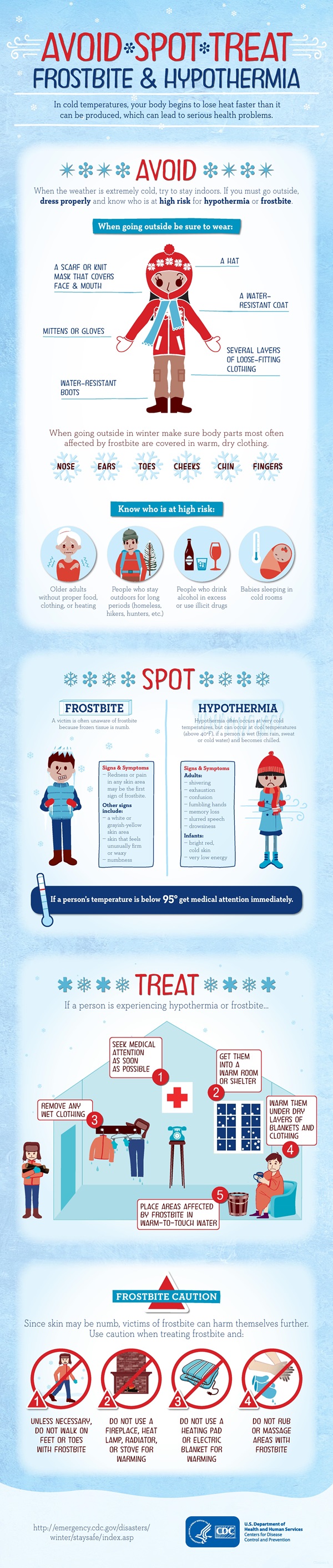
When going outside in the cold, be sure to wear a hat, a scarf or knit mask that covers
your face and mouth, a water-resistant coat, mittens or gloves, water-resistant boots,
and several layers of loose-fitting clothing.
Make sure body parts most often affected are covered in warm, dry clothing:
nose, ears, toes, cheeks, chin, fingers.
How to Spot Frostbite & Hypothermia
Frostbite Symptoms
- Redness or pain in any skin area may be the first sign of frostbite.
- A white or grayish-yellow skin area
- Skin that feels unusually firm or waxy
- Numbness
Hypothermia Symptoms
Adults
- Shivering
- Exhaustion
- Confusion
- Fumbling hands
- Memory loss
- Slurred speech
- Drowsiness
Infants
- Bright red, cold skin
- Very low energy
If a person's temperature is below 95 degrees, get medical attention immediately.
Additional readable text from this image
Who is at High Risk
- Older adults without proper food, clothing, or heating
- People who stay outdoors for long periods, including homeless individuals, hikers, and hunters
- People who drink alcohol in excess or use illicit drugs
- Babies sleeping in cold rooms
Treat Frostbite and Hypothermia
- Seek medical attention as soon as possible.
- Get the person into a warm room or shelter.
- Remove any wet clothing.
- Warm the person under dry blankets and clothing.
- Place areas affected by frostbite in warm-to-touch water.
Frostbite Caution
Because skin may be numb, a person with frostbite can injure themselves further. Do not:
- Walk on feet or toes with frostbite unless absolutely necessary
- Use a fireplace, heat lamp, radiator, or stove for warming
- Use a heating pad or electric blanket for warming
- Rub or massage areas with frostbite
More information:
emergency.cdc.gov/disasters/winter/staysafe/index.asp