
Skip Navigation


Residents in Northwest Florida are familiar with extreme heat, but can sometimes become complacent. If you suspect any of these heat-related conditions, seek immediate medical attention.

Know the Signs

Heat Cramps: Muscular pains and spasms due to heavy exertion. Although heat cramps are the least severe, they are often the first signal that the body is having trouble with the heat.

Heat Exhaustion: Blood flow to the skin increases, causing blood flow to decrease to the vital organs. This results in a form of mild shock. If not treated, the victim’s condition will worsen. Body temperature will keep rising and the victim may suffer heat stroke.

Heat Stroke: A life-threatening condition. The victim’s temperature control system, which produces sweating to cool the body, stops working. The body temperature can rise so high that brain damage and death may result if the body is not cooled quickly.

Sun Stroke: Another term for heat stroke.

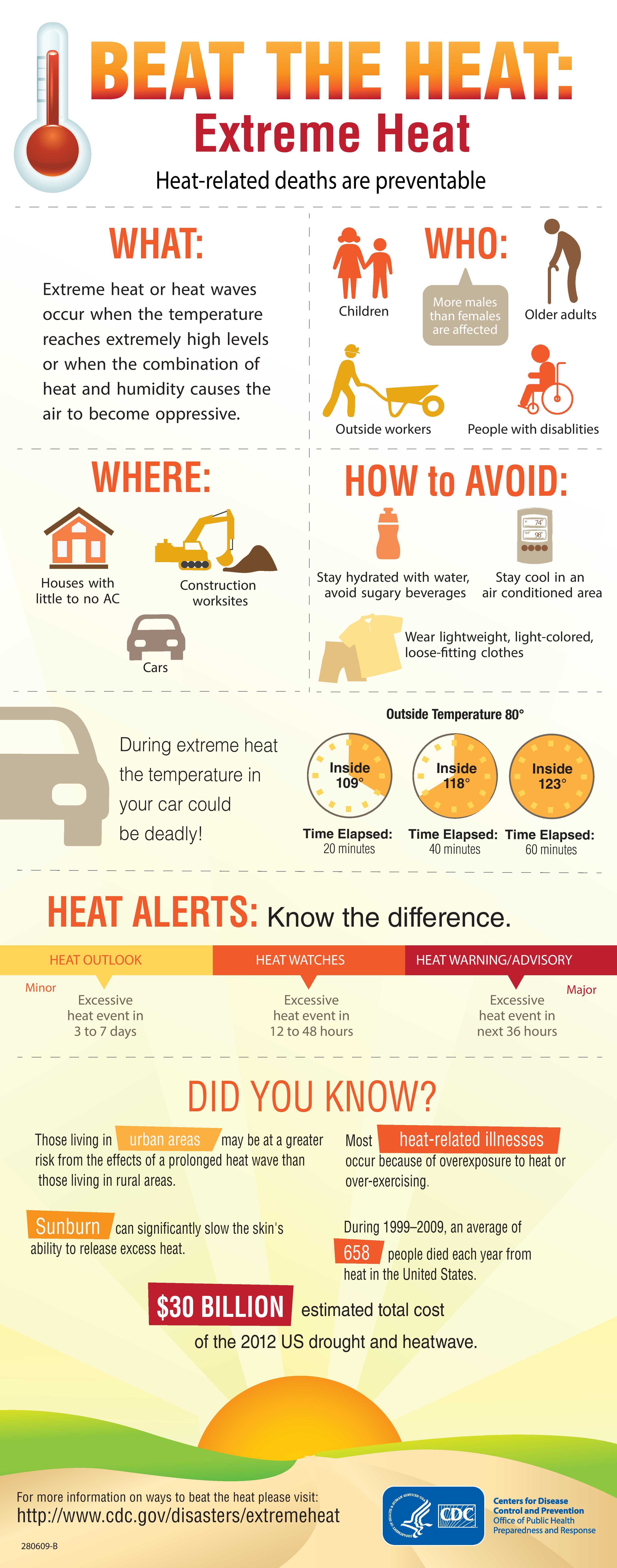
Infographic about extreme heat, including who is at risk, how to avoid heat illness, heat alerts, and safety facts.
Readable text from this image

Beat the Heat: Extreme Heat

Heat-related deaths are preventable.

What

Extreme heat or heat waves occur when the temperature reaches extremely high levels or when the combination of heat and humidity causes the air to become oppressive.

Who

  • Children
  • Older adults
  • Outdoor workers
  • People with disabilities
  • More males than females are affected

Where

  • Houses with little to no air conditioning
  • Construction worksites
  • Cars

How to Avoid

  • Stay hydrated with water; avoid sugary beverages
  • Stay cool in an air-conditioned area
  • Wear lightweight, light-colored, loose-fitting clothes

Heat in Cars

During extreme heat, the temperature in your car could be deadly.

  • Outside temperature 80 degrees: inside car 109 degrees after 20 minutes
  • Outside temperature 80 degrees: inside car 118 degrees after 40 minutes
  • Outside temperature 80 degrees: inside car 123 degrees after 60 minutes

Heat Alerts: Know the Difference

  • Heat Outlook: excessive heat event in 3 to 7 days
  • Heat Watches: excessive heat event in 12 to 48 hours
  • Heat Warning/Advisory: excessive heat event in next 36 hours

Did You Know?

  • Those living in urban areas may be at greater risk from the effects of a prolonged heat wave than those living in rural areas.
  • Most heat-related illnesses occur because of overexposure to heat or over-exercising.
  • Sunburn can significantly slow the skin’s ability to release excess heat.
  • During 1999–2009, an average of 658 people died each year from heat in the United States.
  • $30 billion estimated total cost of the 2012 U.S. drought and heatwave.

For more information on ways to beat the heat, visit: cdc.gov/disasters/extremeheat

Source: Centers for Disease Control and Prevention, Office of Public Health Preparedness

 During a Heat Emergency

Limit exposure to the sun and stay indoors.
Never leave children or pets alone in vehicles.
Stay on the lowest floor in air conditioning. If air conditioning is not available, stay in shaded area.
Eat well-balanced, light and regular meals.
Avoid using salt tablets unless directed by a physician.
Drink plenty of water. Persons who have epilepsy or heart, kidney or liver disease, are on fluid restricted diets, or have a problem with fluid retention should consult a doctor before increasing liquid intake.
Limit intake of alcoholic beverages. None is best.
Dress in loose, lightweight and light-colored clothes that cover as much skin as possible.
Wear a wide-brimmed hat to protect your head.
Check on family, friends and neighbors who do not have air conditioning and live alone.
Avoid strenuous work during the warmest part of the day. Use a buddy system when working in extreme heat and take frequent breaks.

 Don't forget your pets!

Look for signs of heat stress: heavy panting, glazed eyes, rapid pulse, unsteadiness, vomiting or a deep red or purple tongue.
Never leave your pet in a parked vehicle.

If your pet is overheated, move him/her to a cooler area and take these emergency steps:

Apply cool (not cold) water all over your pet's body or soak him/her in a cool bath.
Offer water if your pet is alert and wants to drink, but do not force him/her to drink.
Take your pet to a veterinarian immediately.

Escambia County logo

The mission of Escambia County government is to provide efficient, responsive services that enhance our quality of life, meet common needs and promote a safe and healthy community.

Under Florida law, IP addresses and both the content of emails and email addresses are public records. If you do not want your IP address, the content of your email, or your email address released in response to a public records request, do not send electronic mail to this entity. Instead, contact this office by phone or in person.

All content © 2026 Escambia County, FL and its representatives. All rights reserved.