

Habitat Management Plan
Include property information, impact minimization, and environmental mitigation measures required by the HCP.

Perdido Key Habitat Conservation Plan
The Beach Mouse Permit is an HCP Authorization of Coverage issued under Escambia County's Incidental Take Permit. It helps protect the Key's wildlife while allowing eligible projects to move through a local permitting process.
What is the Beach Mouse Permit?
The Perdido Key Beach Mouse is critically endangered, found only on Perdido Key, and protected by the Endangered Species Act. Before the County's Habitat Conservation Plan (HCP), property owners seeking to develop on the Key had to apply directly to the U.S. Fish and Wildlife Service (USFWS) for an Incidental Take Permit (ITP), a process that could take up to two years.
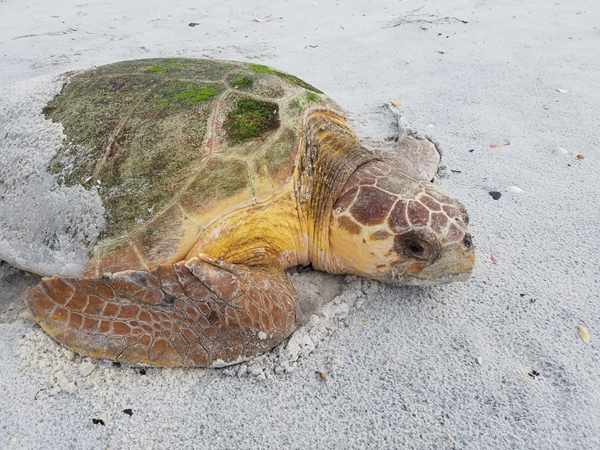
Escambia County obtained an ITP to support wildlife protection and sustainable development. When a project meets the HCP criteria, the County may issue an Authorization of Coverage under its ITP. The HCP's measures are designed to protect beach mice, sea turtles, shorebirds, and the habitats they rely on.

Start with your parcel
Parcels containing critical or suitable Beach Mouse habitat, as determined by USFWS, must have a Beach Mouse Permit. The Escambia County Property Appraiser's website can provide a preliminary overview of parcel information, including zoning and whether critical habitat is present.
Confirm the parcel's zoning and critical habitat acreage with the County before moving forward with a permit.
Application checklist
Submit the following for review before an Authorization of Coverage can be issued.
Include property information, impact minimization, and environmental mitigation measures required by the HCP.
Submit the Beach Mouse Land Disturbance Permit and pay the required fees.
Show proposed impacts, lighting fixtures and locations, general landscaping, and other environmental mitigation or design features.
Additional project requirements
From application to authorization
The HCP sets the total acreage of authorized impact over its 30-year term. The acreage is allocated in five-year increments by zoning category. When a category's allocation is used, additional permits must wait until the next five-year cycle.
The County issues permits on a first-come, first-served basis. It cannot issue a permit until all plans are approved and impact fees are paid in full.
Run permitting alongside project design. Final site plans, including lighting, landscaping, and mitigation measures, must be reviewed and approved before a permit can be issued.
Forms and references
Download the two PDF forms linked from this page.
Protecting connected habitats
The HCP measures are intended to protect beach mice, sea turtles, shorebirds, and the habitats they depend on.


The mission of Escambia County government is to provide efficient, responsive services that enhance our quality of life, meet common needs and promote a safe and healthy community.
Under Florida law, IP addresses and both the content of emails and email addresses are public records. If you do not want your IP address, the content of your email, or your email address released in response to a public records request, do not send electronic mail to this entity. Instead, contact this office by phone or in person.
All content © 2026 Escambia County, FL and its representatives. All rights reserved.