


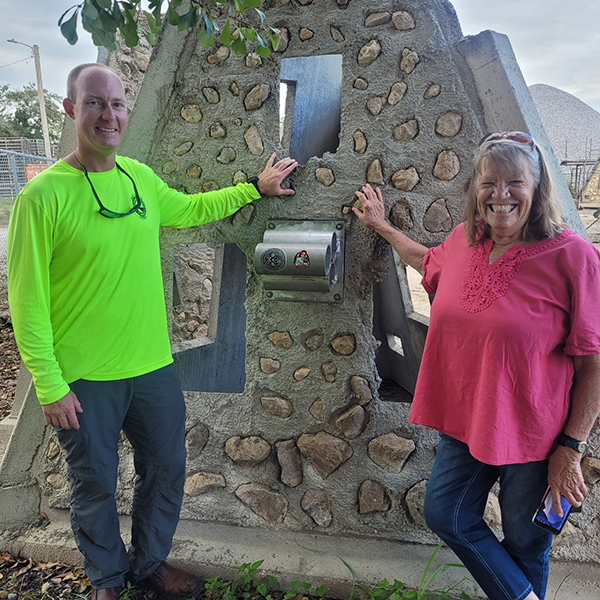
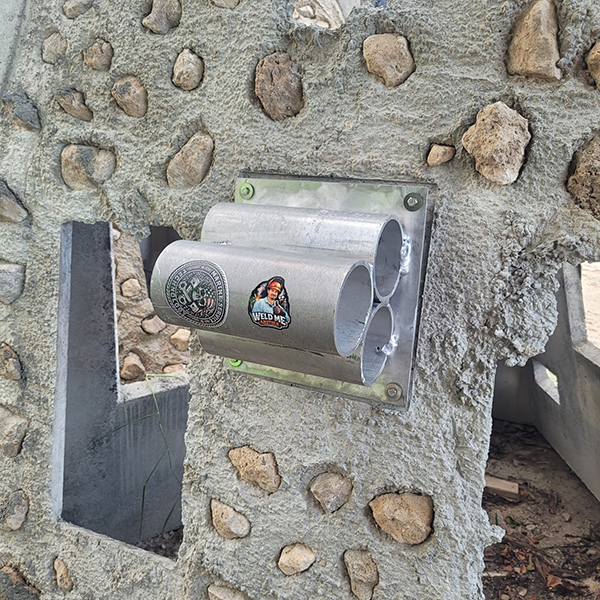
Escambia County and Santa Rosa County are joining forces to give damaged metal signposts a second life as an underwater micro-habitat for marine life. Through a collaborative “reef-cycling” initiative, the two counties are repurposing damaged metal signposts by incorporating them into concrete artificial reef modules. The partnership brings together local government, education and environmental stewardship to create lasting benefits for marine life and the communities that enjoy these resources.
This is part of a pilot project to determine if these added metal structures on select planned concrete modules will provide shelter for small fish and invertebrates. This Florida Fish and Wildlife Conservation Commission funded Natural Resources Damage Assessment Artificial Reef project consists of 124 concrete reef modules deployed in the Escambia County near-shore east site. The micro-habitat structures attached to the concrete modules are an opportunity to use the metal from the signposts to further enhance the upcoming FWC-NRDA deployment.
The project also includes students from the welding program at George Stone Technical College, who are helping transform the scrap materials into structures that can be incorporated into the artificial reef modules. This hands-on experience allows students to apply their technical skills to a project that directly benefits the region’s marine environment.
"We're excited about this partnership between both counties and George Stone Technical College, which not only provides valuable experience for George Stone welding students, but also benefits local divers, anglers, and marine life through this new underwater habitat," said Robert Turpin, Escambia County Marine Resources Division Manager. "This new habitat will be a great addition to our artificial reefs, providing opportunities for important scientific research into the relationships between reef habitat and marine species."
“Working with Escambia County on this project has shown what we can accomplish when we look for creative solutions together,” said Chris Verlinde, Natural Resources Coordinator for Santa Rosa County. “This collaboration extends beyond jurisdictional boundaries to protect and enhance our shared natural resources. By repurposing materials into artificial reef habitat, the counties are reducing waste, strengthening the region’s reef network, and creating benefits for marine life, education, and recreation.”
This reef-cycling project demonstrates how regional partnerships can create innovative solutions that benefit the environment, education and the communities of Santa Rosa and Escambia Counties. By repurposing materials that might otherwise be discarded, the partnership strengthens the region’s artificial reef network while providing educational opportunities for the next generation of skilled workers.

The mission of Escambia County government is to provide efficient, responsive services that enhance our quality of life, meet common needs and promote a safe and healthy community.
Under Florida law, IP addresses and both the content of emails and email addresses are public records. If you do not want your IP address, the content of your email, or your email address released in response to a public records request, do not send electronic mail to this entity. Instead, contact this office by phone or in person.
All content © 2026 Escambia County, FL and its representatives. All rights reserved.