


Escambia County is beginning recovery efforts including damage assessments and debris clearing following Hurricane Isaias, which made landfall near Destin, Florida on Friday, Oct. 9 as a Category 2 hurricane with sustained winds of 105 mph. Residents should follow the safety tips below when beginning their own recovery efforts.
Generator Safety
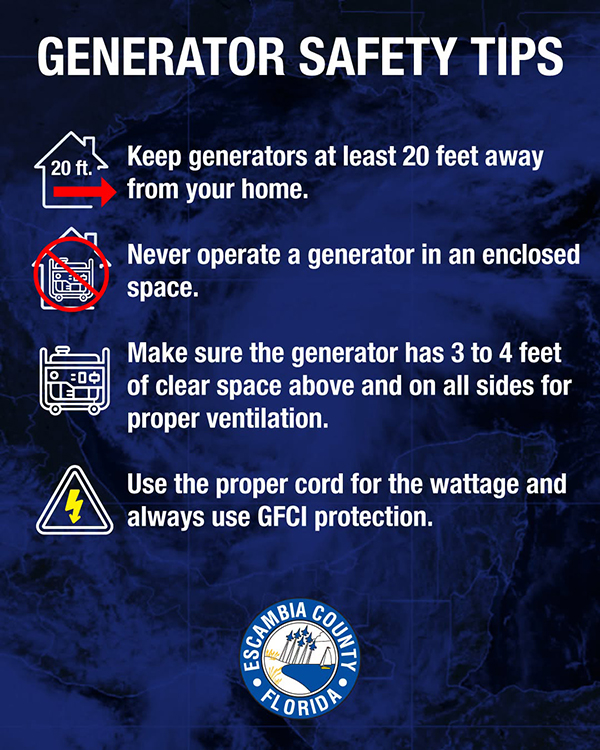
A generator is an important tool for families looking to restore power to their homes after a natural disaster. It can keep the lights and fans running and power essential appliances such as refrigerators, freezers, microwaves, stoves, air conditioners, washers, and dryers.
However, it’s important to know how to operate a generator safely. Follow the safety tips below when using a generator after a storm:
Downed Power Lines
After a natural disaster such as a hurricane, several hazards may be present on the roads. several hazards may be present on the roads including downed power lines. It’s important to treat all downed power lines as if they are still energized. Downed power lines are among the most dangerous post-disaster hazards.
Safety Tips if you Encounter a Downed Power Line:
Cleaning Up Safely After the Storm
Hurricane Isaias has produced a large amount of debris and caused widespread damage. Sometimes, the debris left behind by the storms can carry hidden dangers and hazards. It’s important to know the steps to protect yourself and your property.
Safe Cleanup Practices:
For more information about safety after a storm, visit myescambia.com/beready.

The mission of Escambia County government is to provide efficient, responsive services that enhance our quality of life, meet common needs and promote a safe and healthy community.
Under Florida law, IP addresses and both the content of emails and email addresses are public records. If you do not want your IP address, the content of your email, or your email address released in response to a public records request, do not send electronic mail to this entity. Instead, contact this office by phone or in person.
All content © 2026 Escambia County, FL and its representatives. All rights reserved.